
Inside this guide
01 / START HERE
Same four wheels, very different systems.
All-wheel drive and four-wheel drive can both turn all four wheels. What the badge leaves out is how they do it: whether the system works on its own, whether it can lock the front and rear together, and whether it has a low gear for slow, heavy work.
If you mostly drive I-30 and town streets, the big question is which mode you can leave on every day on dry pavement. If you work a pasture, launch a boat at Lake Fork or Cooper Lake, or hunt a muddy lease, the questions turn to low gearing, ground clearance and tires. The model name alone can’t answer those.
Some 4WD systems have a full-time or automatic mode made for everyday pavement. Others are part-time, and their locked modes are meant for loose or slick surfaces only. Jeep separates these types in its own system descriptions.1 Treat “AWD versus 4WD” as the beginning of the conversation.
Shopping for a three-row SUV? See Dodge Durango prices and AWD options.
02 / UNDERSTAND THE HARDWARE
Follow the connection.
Tap each mode to see how power moves between the front and rear axles. The table under the diagram lists what to confirm on any vehicle you’re considering.
The system manages the connection.
Most AWD systems decide on their own how much power goes to each axle. Many drive mainly one axle and bring in the other the moment a tire starts to slip. How it works, and which buttons you get, depends on the vehicle.
Ask: What does this system do on its own, and which settings are fine for everyday pavement?
CONCEPTUAL ILLUSTRATION · The lines show the idea, not real part locations, torque splits or any one vehicle’s layout. Real-world behavior varies by model.
| Concept | What it means | What to verify |
|---|---|---|
| Automatic AWD | The vehicle shifts power between the axles by itself when it senses slip. | How it behaves by default, which drive modes it has, and the tire requirements. |
| Full-time / automatic 4WD | A mode built to handle the different speeds of the front and rear wheels in turns on pavement. | Which setting is safe for pavement, and the limits on the other settings. |
| Locked high range | The transfer case ties the front and rear driveshafts together for the surfaces the manual lists. | Which surfaces it’s meant for. Locking the transfer case is not the same as locking the axle differentials. |
| Low range | An extra-low gear in the transfer case for slow, controlled work, on vehicles that have it. | How to shift into it on that vehicle, and when you’re allowed to use it. |
03 / READ THE ACTUAL VEHICLE
The knob on the dash tells you more than the badge.
Two trucks can both say 4×4 and still give you different options. Below are manual-based label examples, not photographs of dealership stock or confirmation that every example has the same equipment.
2026 JEEP WRANGLER · EQUIPPED FIVE-POSITION EXAMPLE
Per the owner’s manual, 2H and 4H AUTO are fine on pavement, while 4H PART TIME and 4L are for loose or slick surfaces. Some Wranglers use a different transfer case, so check the one in the vehicle you’re looking at.2
2026 RAM 1500 · EQUIPPED FIVE-POSITION EXAMPLE
The RAM manual lists 4WD AUTO separately from 4WD HIGH and 4WD LOW. Not every RAM 1500 has the AUTO setting, so confirm it on the truck instead of assuming it from the 4×4 badge.3
N (neutral) is for things like flat towing, not for extra traction. Follow the shift steps in your owner’s manual for your exact vehicle, rather than a general article like this one.
Don’t ask “Which is better?” Ask “Which system does this one have?”
04 / BUY FOR YOUR REAL WEEK
Choose for the roads you actually drive.
Your normal week matters more than a once-a-year adventure. Pick the one that sounds like you to see what to ask when you look at a vehicle.
YOUR DAILY ROUTE
Pick a mode you can leave on all the time.
For commuting on I-30 and in town through rain and the occasional ice storm, look for an automatic AWD or full-time 4WD mode you can leave on. Then compare tires, ride comfort, visibility and fuel costs. Four driven wheels alone don’t make a better daily driver.
At the vehicle: “Show me the everyday road setting and where the manual explains it.”
This guide helps you shop. It doesn’t make flooded roads or closed crossings safe. When water is over the road, turn around, whatever you drive.
05 / THE LIMITS MATTER
Going is not the same as stopping.
AWD and 4WD help you get moving. They don’t shorten your stopping distance, add grip in a curve, or make ice safe.
Tires do most of the work: check the tread, the tire type and the pressure on the door-jamb sticker. NHTSA’s winter driving advice also says to slow down and leave extra room when roads get slick.4
On any vehicle, look at the tires as closely as the drivetrain: matching size, even wear and the type the manufacturer calls for. No drive system makes up for worn tires.
If you tow, work out the numbers for that exact vehicle. AWD or 4WD doesn’t set the towing rating, payload or how your loaded trailer will behave.
06 / SAVE THIS FOR THE LOT
Your 7-point drivetrain checklist.
AWD & 4WD vehicle-shopping checklist
Bring this when you shop, in person or online. If something isn’t clear yet, leave it unchecked until we show you.
0 OF 7 CHECKED · Selections reset when you reload—print or copy to keep them
07 / THE QUESTIONS THAT COME UP
Quick answers to common questions.
Can I use 4WD on dry pavement?
Only in the right mode. Full-time and automatic 4WD modes are made for pavement. A part-time locked mode like 4H PART TIME is meant for loose or slick surfaces. Your owner’s manual shows which is which.1
Does 4WD mean all four wheels are locked together?
No. Locking the transfer case ties the front and rear together. Locking a differential ties the left and right wheels on one axle together. They are separate features, so ask about each.
Does AWD always have low range?
No. Most AWD vehicles have no low range, and not every 4WD has it either. Check the equipment list or window sticker for the exact vehicle.
Is 4WD automatically better for towing?
Not by itself. Towing ability comes from the vehicle’s tow rating, payload, engine, axle ratio and hitch. 4WD helps on a slick ramp or wet grass, but it doesn’t raise the rating.
What if an online listing just says “4×4”?
Ask us. We’ll pull the VIN equipment details and send photos of the controls, so you know exactly which system it has before you buy, online or in person.
08 / PUT THE GUIDE TO WORK
Ready to shop? Start close to home.
Pick your town to jump to Jeep, Dodge and RAM inventory at Sulphur Springs Dodge, then use the checklist on the vehicle you like.
SHOP WITH SULPHUR SPRINGS DODGE
Start with Sulphur Springs Dodge.
Sulphur Springs Dodge is locally owned and operated at 1505 Industrial Dr W, Sulphur Springs, TX 75482. Every link here leads to our own inventory and pages. Buy online or by phone, with free delivery within 300 miles on new vehicles.
Ask us about any vehicle · 903-885-2600 ↗Buy the system you can see and confirm, and the one your roads actually need.
RESEARCH & TRANSPARENCY
How this guide was built.
Sulphur Springs Dodge wrote this guide with AI help for research, drafting, diagrams and layout. We did not run instrumented tests, inspect a specific VIN or measure traction. The diagrams show concepts only, so always check equipment and procedures on the exact vehicle.
Primary sources and equipment qualifications
- Jeep: 4×4 systems and 4×4 FAQ and glossary. System categories, full-time and part-time distinctions. Manufacturer terminology is not identical across all brands.
- 2026 Jeep Wrangler Owner’s Manual, U.S./Canada, “Four-Wheel Drive Operation,” printed pages 178–180. Equipped five-position example; not the only Wrangler transfer case.
- 2026 RAM 1500 Owner’s Manual, U.S./Canada, “Four-Wheel Drive Operation,” printed pages 200–203. Equipped five-position labels; configurations differ. Some procedure headings use different nomenclature, so follow the installed controls and applicable instructions.
- NHTSA: Tires and Winter Driving Tips. Tire care and driving precautions. These sources do not establish a universal AWD-versus-4WD performance ranking.
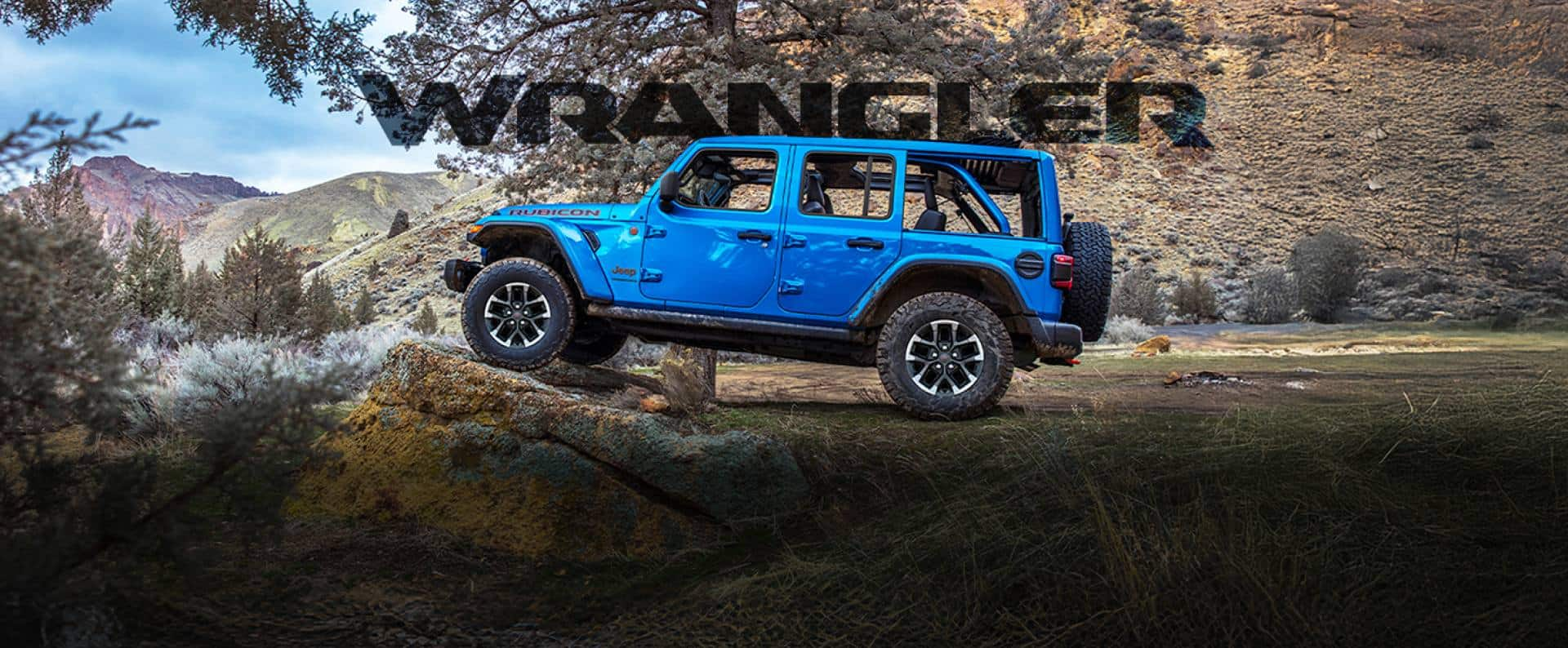
Sources checked November 15, 2026. The top photo comes from Jeep’s 2026 Wrangler website. This guide is not endorsed by any manufacturer.